Why Your Local SEO Is Not Bringing Walk-Ins or Calls
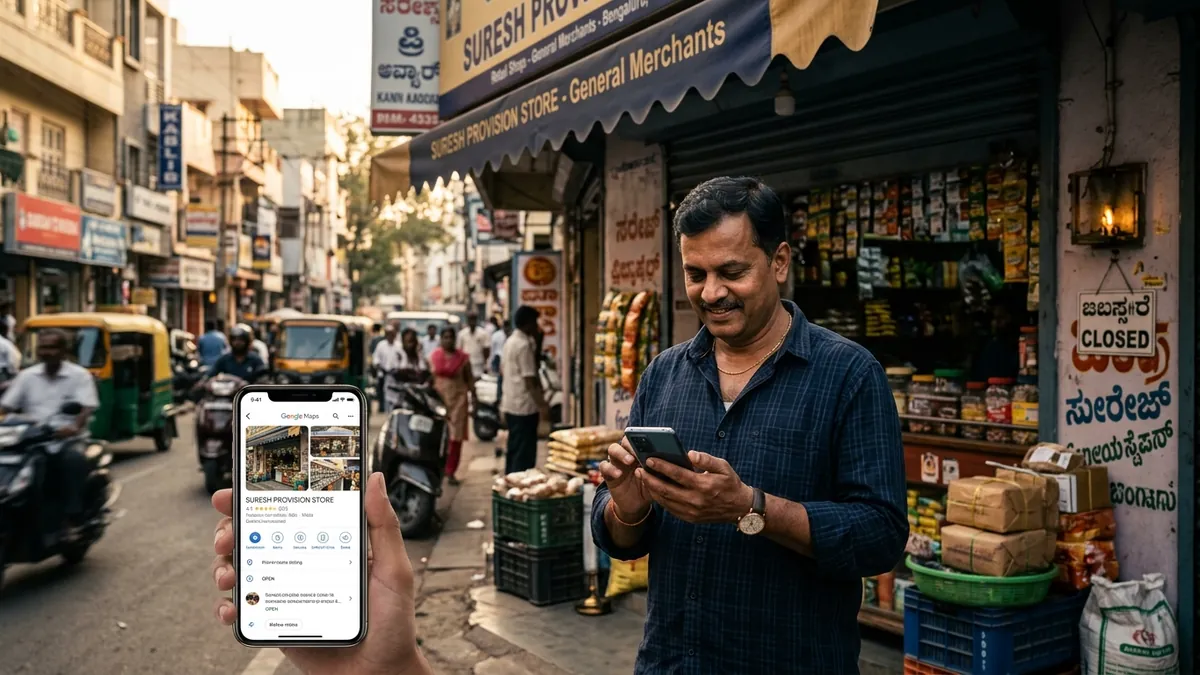
Most business owners I meet tell me the same thing. They say, 'We are on Google, we even show up on Maps, but the calls are not coming.' This is one of the most frustrating situations for a local business — you did the basics right, you got listed, and still nothing happens. The problem is not your listing. The problem is everything that surrounds it.
Local SEO is not just about appearing in a search result. It is about appearing in the right search, at the right moment, with enough trust signals that a stranger picks up the phone or walks through your door. Most Indian businesses — whether it is a CA firm in Pune, a hardware supplier in Coimbatore or a dental clinic in Bengaluru — have a listing but they have not built the trust layer around it. That trust layer is what converts a viewer into a caller.
The first thing I check when a client says local SEO is not working is their Google Business Profile photos. I have seen businesses with one blurry exterior photo posted three years ago. That is it. A potential customer searching for your category sees five competitors. Four of them have clear interior shots, team photos, product images, and recent updates. You have one old photo. Who do they call? Not you. Photos are the single fastest thing you can update today and they make an immediate difference to how your listing feels to someone deciding in ten seconds.
The second issue is reviews — specifically, the recency of reviews. A business with 47 reviews but the last one was posted fourteen months ago looks abandoned. It signals that either customers stopped coming or the owner stopped caring. Neither is good. I always tell founders: reviews are not a one-time campaign, they are an ongoing habit. Set a simple system — after every good interaction with a customer, your front desk or sales person sends a WhatsApp message with a direct Google review link. Do this consistently for sixty days and watch what changes.
Now let us talk about your website, because this is where local SEO either gets completed or collapses. Your Google listing brings someone to the door. Your website is the door. If a person clicks your website link from the Maps listing and lands on a page that loads slowly, has no clear address mentioned, no phone number visible above the fold, and no local context — they leave. Google notices this too. High bounce rates from local searches tell the algorithm that your page is not serving local intent. Make sure your homepage or contact page clearly mentions your city, area, and the specific services you offer locally. Do not just say 'we offer consulting services.' Say 'we offer accounting and tax filing services in Jayanagar, Bengaluru.'
Another thing that kills local visibility is inconsistent NAP — that stands for Name, Address, Phone number. If your Google listing says one address, your website footer says a slightly different one, your Justdial listing uses an old mobile number, and your Instagram bio has no address at all — you have a credibility problem in Google's eyes. The algorithm cross-references these signals. Inconsistency reduces your chances of showing in the local pack, which is the top three results that appear on Maps searches. Audit every place your business is listed online. Make the details identical everywhere. This is boring work but it pays off. If you want to go through this audit properly with guidance, a one-to-one consultation is often the fastest way to find and fix these gaps without missing anything.
Many local business owners also ignore the 'Posts' feature inside Google Business Profile. This is a free tool that lets you publish offers, updates, events and announcements directly on your listing. Most businesses I audit have never used it once. When you post regularly — even once every ten to fifteen days — your listing stays active, Google treats it as a live business, and customers see something current when they find you. Write in plain language. 'New batch of summer kurtas just arrived at our store in Malleshwaram. Walk in this week.' That is enough. You do not need marketing language.
One more thing that most people miss: the Q&A section on your Google listing. Anyone can ask a question there and anyone can answer it. I have seen competitor questions left unanswered for months, and I have also seen business owners answer their own questions to pre-handle common objections. You can ask questions yourself — 'Do you offer home delivery?' — and then answer them. This fills out your listing with useful information and also helps your listing rank for longer keyword phrases people type into Google. It takes thirty minutes to set up five good Q&As and it keeps working for you silently. If you want to learn how to build a complete local presence system like this, check out the business growth workshops where I cover this in a practical session designed for small business teams.
Local SEO is not a technical mystery. It is a collection of small, consistent actions done well over time. Update your photos. Collect fresh reviews every month. Make your website mention your location clearly. Match your business details everywhere. Post updates on your listing. Answer the questions customers have before they even ask. I have seen a retail store in Bengaluru double its walk-in traffic in three months just by doing these things properly — no paid ads, no agency fees. The work is straightforward. What most businesses are missing is the discipline to do it and someone to show them exactly where to start. If you want that specific direction for your business, reach out here and we can look at what needs fixing first.
Want to understand where your business growth is stuck?
Book a Business Growth Diagnostic with Abhijit JK — an honest, focused 60-minute one-to-one session with Abhijit JK on your brand, website and growth.
Book a Business Growth Diagnostic