Why Your Reels Get Views But Your Business Gets Nothing
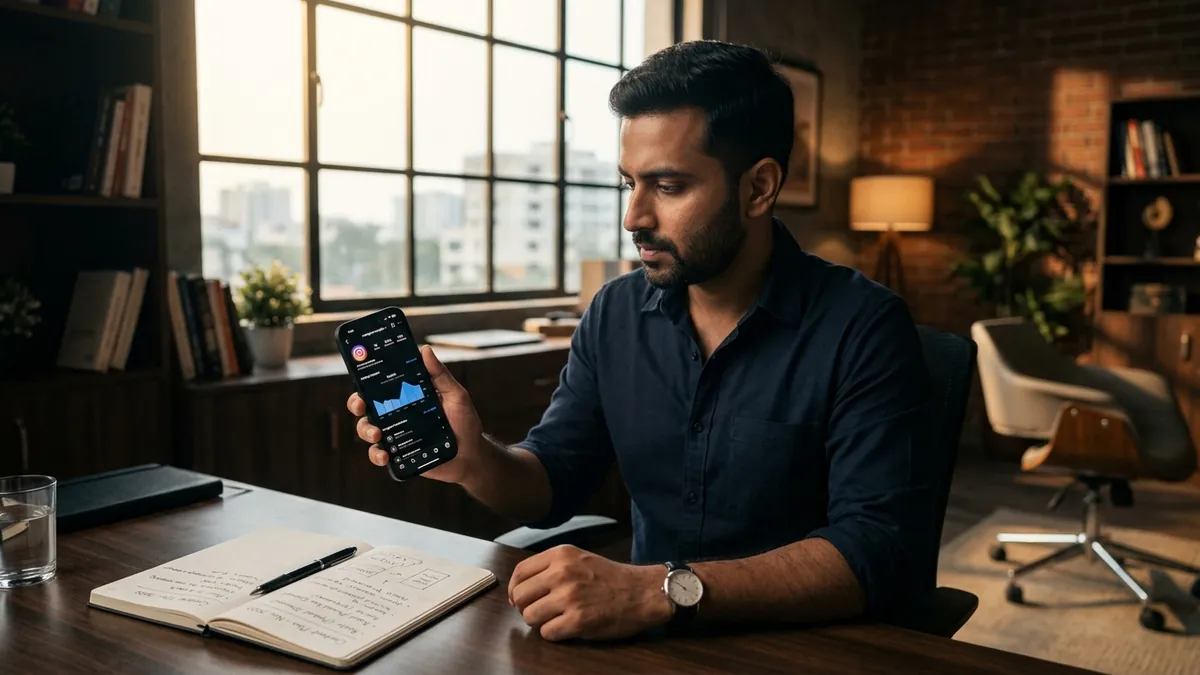
Most business owners I meet are proud of their Reels numbers. Ten thousand views. Fifteen thousand on a good week. But when I ask them how many enquiries came from those Reels last month, the answer is almost always the same. Two. Maybe three. Or honestly, none that they can trace directly. The views feel like progress. The business results say otherwise.
This is one of the most common traps I see Indian founders fall into right now. They start posting Reels because someone told them it is the algorithm's favourite format. They hire a videographer, write a trending audio script, get the hook right in the first three seconds — and the video takes off. But nobody calls. Nobody fills the form. Nobody sends a WhatsApp message saying 'I saw your Reel and I want to know more.' The content is working. The business is not benefiting. These are two completely different problems.
The root issue is almost always the same: the content is built for reach, not for conversion. There is a difference. Reach-focused content is designed to get views from as many people as possible. Conversion-focused content is designed to get the right person to take one specific next step. Most Reels made by businesses in India today are reach content dressed up to look like business content. They show the product, they add a catchy caption, they pick a trending sound — and they hope the business follows. It rarely does.
Here is what I have seen work consistently. The Reels that actually bring enquiries are the ones that speak directly to one specific problem of one specific buyer. Not a general audience. Not 'people who like furniture' or 'people interested in fitness.' One real problem. A manufacturer in Coimbatore I worked with was getting good views on his factory tour Reels. Zero business leads. We changed his content to answer one question his buyers always ask: 'How do I know your quality is consistent across large orders?' That one shift — same format, different message — started bringing him direct messages from procurement managers within three weeks.
The second mistake is having no clear next step inside the video itself. Most Reels end with the logo or a product shot. That is not a call to action. A real call to action tells the viewer exactly what to do and why to do it right now. 'Send me a message if you are a retailer looking for a wholesaler in Bengaluru.' 'Comment QUOTE and I will send you our pricing PDF.' Specific, low-friction, relevant to the viewer you actually want. If you are not telling people what to do next, they scroll away. The algorithm rewards them for it. You lose the lead. If you want help thinking through what your next step should actually be, a one-to-one consultation is the fastest way to get that clarity.
The third problem is that most business Reels have no connection to the rest of the brand. Someone watches your Reel, they like it, they visit your profile. The bio is vague. The highlights are empty or outdated. The website link goes to a homepage that looks nothing like the energy of the Reel. The trust breaks in those thirty seconds. You had them. You lost them. This is why I always say Reels do not work in isolation. They work when the entire customer path — from the video to the profile to the link to the first conversation — is clear and consistent. A proper brand analysis will usually reveal exactly where this path breaks for your business.
There is also the problem of making content that is too broad because you are afraid of excluding people. I understand that fear. Every business owner wants to reach everyone. But when you speak to everyone, you move no one. The Reels that convert have an almost uncomfortable specificity. They name the city, the industry, the situation. 'If you are a D2C founder in India spending more than fifty thousand rupees a month on ads and still not seeing consistent sales — this is for you.' That opening line will get skipped by ninety percent of viewers. The ten percent who stay are exactly the people you want to talk to. That is how content becomes a business tool instead of an entertainment product.
One more thing I want to address. Many founders tell me they do not want to appear on camera. They are comfortable making product Reels or process Reels but not showing their face. I respect that. But the data from businesses I have worked with is clear — Reels where the founder speaks directly, even briefly, get significantly more enquiries than polished product videos. People buy from people. Especially in Indian business culture where relationships and trust matter more than in most markets. You do not need to be a content creator. You need to be honest and useful on camera for sixty seconds. That is enough. If this feels difficult, the 2-day business growth workshop covers exactly how founders can build this habit without it consuming their schedule.
The fix is not complicated but it does require intention. Stop making Reels to get views. Start making Reels to start conversations. Pick one problem your best customer has. Speak to it directly. Tell them one thing to do next. Make sure your profile and the link in your bio can actually receive that person properly. Do this consistently for ninety days before you judge the results. Views are vanity in the absence of a system behind them. Build the system first. The views become useful only when they have somewhere to go.
Want to understand where your business growth is stuck?
Book a Business Growth Diagnostic with Abhijit JK — an honest, focused 60-minute one-to-one session with Abhijit JK on your brand, website and growth.
Book a Business Growth Diagnostic