Why Your Business Proposal Gets Read But Never Replied To
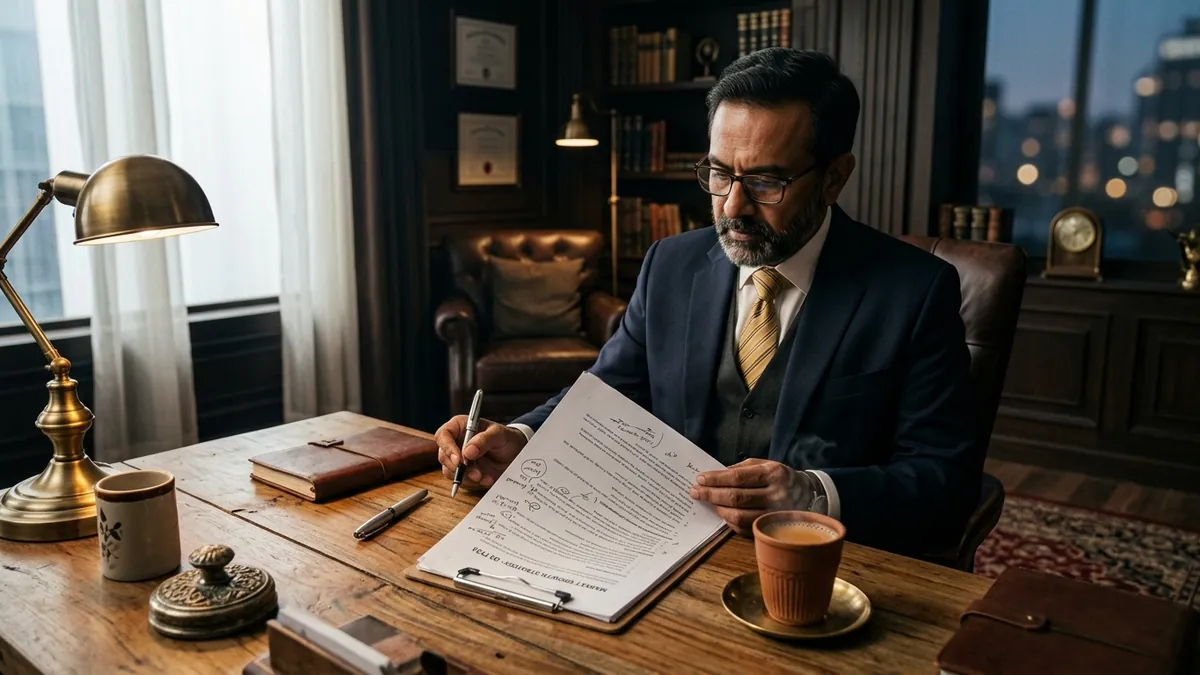
Most business owners I meet have the same frustration. They spend two or three hours writing a proposal. They send it across. The prospect says 'looks good, will review and revert.' And then nothing. No call. No email. Complete silence. They follow up once, twice. Then they quietly accept that the deal is lost and move on. This is one of the most common — and most fixable — problems I see with Indian MSMEs.
The first thing to understand is this: a proposal is not a quotation. Most proposals I review from small business owners are just price sheets dressed up with some company information. Logo on top, services listed, cost at the bottom, bank details sometimes included. That is a quotation. A proposal is different. A proposal tells the other person that you understand their problem and here is how you are going to solve it. If your document does not do that, you are not sending a proposal. You are sending an invoice for work that hasn't been agreed on yet.
The second problem is that most proposals are written for the sender, not the reader. You write about your company history, your team size, your certifications, your past clients. The prospect does not care about any of that at the start. They care about one thing — can this person solve my problem without creating more headaches for me? Start with their situation. Write two or three lines that describe exactly what they told you in the meeting or call. This immediately tells them you were listening. That alone separates you from 80 percent of the proposals sitting in their inbox.
I have worked with manufacturers and service businesses where the owner is handling sales entirely alone. They are quoting ten prospects a week and using the same template for everyone. The template has no personalization beyond the name and amount. This is a volume game that almost never works in B2B sales in India. A well-written, specific proposal sent to five people will outperform a generic one sent to fifty. If you are not sure why your pipeline dries up even when you are busy sending proposals, it is worth doing a proper business growth diagnostic to find where exactly the leakage is happening.
The third issue is that proposals are often too long or badly structured. I have seen twelve-page proposals from small consultants and three-page ones from large agencies. The length is not the point. The structure is. A good proposal should move like this: here is what I understood about your situation, here is what I am recommending and why, here is how the process will work, here is what it will cost, here is what happens next. That last line — what happens next — is almost always missing. Most proposals just end. No clear call to action, no deadline, no next step. The prospect reads it and thinks 'I'll look at this later' and later never comes.
Pricing presentation is another area where deals silently die. A lot of MSME owners either show one price and hope for the best, or they show a breakdown so detailed it invites the prospect to start cutting line items. Neither approach works well. What works better is offering two or three clear options — not confusing tiers, but genuinely different scopes — so the prospect is choosing between your options rather than choosing between you and someone else. This shifts the conversation from 'should I hire them' to 'which package makes sense for me.' It is a small change that makes a measurable difference.
Follow-up after sending a proposal is where most founders are either too passive or too pushy. They either wait and hope, or they message every two days sounding increasingly desperate. Neither works. A better approach is to set a specific follow-up date in the proposal itself. Say something like 'I will call you on Thursday to walk you through any questions.' Then call on Thursday. This is not aggressive. It is professional. It also gives the prospect a reason to actually read the proposal before that call. If you want to build this kind of structured sales process across your business, a one-to-one consultation can help you map it out properly.
One thing I always ask business owners when they tell me their proposals are not converting: did you actually have a proper discovery conversation before writing the proposal? Most of the time the answer is no. They had a thirty-minute introductory call, got a rough brief over WhatsApp, and sat down to write. A proposal written without understanding the client's actual constraints — timeline, internal approvals, budget range, what they tried before — is essentially a guess. Sometimes it lands. Usually it doesn't. Slow down the proposal. Speed up the discovery.
If you are consistently getting no replies after sending proposals, treat it as a signal about your sales process, not just your writing. The proposal is the final step of a conversation that should have already built enough trust and clarity for the reply to be almost automatic. If people are going cold after reading your proposal, something earlier in the conversation is missing — the positioning, the qualification, the follow-through. I cover exactly this kind of end-to-end sales and brand clarity work in the 2-day business growth workshop. Fix the proposal, yes. But also fix what comes before it.
Want to understand where your business growth is stuck?
Book a Business Growth Diagnostic with Abhijit JK — an honest, focused 60-minute one-to-one session with Abhijit JK on your brand, website and growth.
Book a Business Growth Diagnostic