Why Your Enquiries Never Convert Into Paid Orders
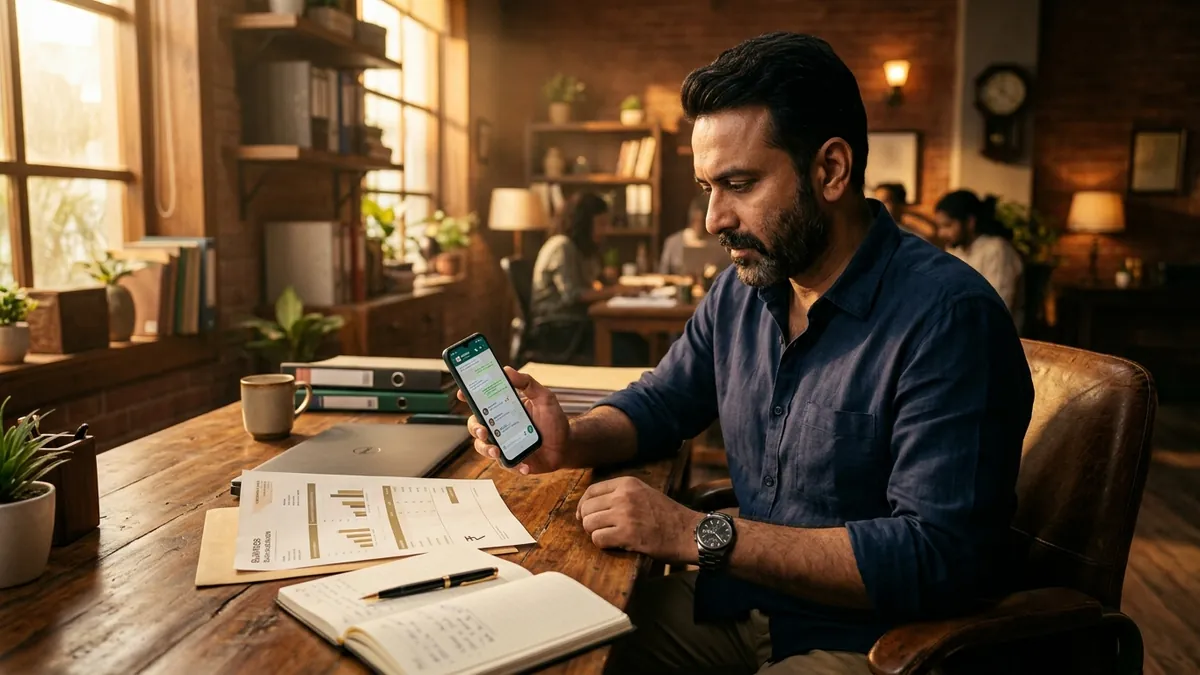
Most business owners I meet are not struggling with visibility. They are struggling with what happens after someone shows interest. The enquiries are coming — on WhatsApp, on Instagram DMs, through the website form, sometimes even a phone call. But by the end of the week, almost none of them have turned into actual paid orders. The founder blames pricing. Or the economy. Or the fact that people are just 'window shopping.' That is rarely the real problem.
Here is what is actually happening. When a potential customer reaches out, they are at a very specific moment — interested but not yet convinced. What they need in that moment is clarity, confidence and a reason to move forward. What most businesses give them instead is a delayed reply, a confusing message, a generic PDF brochure or a price without any context. That gap — between their interest and your response — is where the order dies.
I worked with a packaging manufacturer in Pune who was getting 30 to 40 enquiries every month from small food brands. His conversion rate was below 8 percent. When I sat with him and mapped out exactly what happened after each enquiry came in, the pattern was obvious. Replies were going out 24 to 48 hours late. The response itself was a catalogue link and a price list. There was no follow-up unless the customer asked again. By that time, they had already spoken to three other vendors. He was not losing on price. He was losing on process.
The first thing to fix is response speed. In India's B2B and B2C markets, the business that replies first and replies well wins a disproportionate number of orders. This is not about being desperate. It is about respecting the customer's momentum. When someone enquires, they are warm. Every hour you wait, they cool down. Set a rule inside your team — every enquiry gets an acknowledgement within 30 minutes during working hours. Not a full proposal. Just a human message that says you have received their query and will respond with details shortly. That alone changes how the conversation begins.
The second problem is what you send when you do respond. Most businesses send information. What you should be sending is a conversation starter. Instead of a price list, ask one or two qualifying questions. What is the quantity you need? What is your timeline? Is this for a new launch or a repeat order? These questions do two things. They help you customise your response. And they make the customer feel that you are paying attention to their specific situation — not just sending the same thing to everyone. If you are unsure how to structure this kind of customer journey properly, this is exactly what I walk founders through in one-to-one consultation sessions.
The third blocker is the proposal or quotation itself. I have seen quotations that are just a table with item names and prices. No context. No explanation of what makes this business the right choice. No next step mentioned. The customer receives it, reads it, and has no idea what to do next. A good proposal — even a simple one — should briefly restate what the customer needs, show that you understood their requirement, present your solution with clarity, and end with a specific call to action. 'Please confirm by Thursday so we can schedule your order for this week's production run.' That kind of language moves people forward.
Follow-up is the most ignored part of the conversion process in Indian small businesses. Most founders follow up once, get no reply, and assume the customer is not interested. In reality, most customers need two to four touches before they decide. They are busy. They forget. They are comparing options. A structured follow-up sequence — a message on day two, a call on day four, a final message on day seven — is not being pushy. It is being professional. The businesses I have seen double their conversion rates have almost always done it by fixing follow-up, not by changing their pricing. If you want to build this as a repeatable system inside your team, the business growth workshops I run are designed for exactly that.
There is also a trust gap that many founders do not see. When a new customer enquires, they do not know you yet. They are taking a risk. Every element of your communication — how quickly you reply, how clearly you write, how professional your proposal looks, whether you follow up — is building or breaking that trust before they have even placed an order. This is why businesses with a clear, consistent communication process close more orders than businesses that rely entirely on the quality of their product or service. The product matters. But it only gets a chance if the process gets the customer to say yes first.
If you read this and recognised your own business in any part of it, start with one thing this week. Map out what happens — step by step, minute by minute — after an enquiry comes in on WhatsApp or your website. Write it down. You will find the gaps yourself. Fix the slowest or most broken step first. Then build from there. Conversion is not a sales trick. It is a system. And systems can be built, even in small teams, even with limited budgets. You do not need a CRM tool or a sales team to start. You need a clear process and the discipline to follow it every time.
Want to understand where your business growth is stuck?
Book a Business Growth Diagnostic with Abhijit JK — an honest, focused 60-minute one-to-one session with Abhijit JK on your brand, website and growth.
Book a Business Growth Diagnostic