Why Enquiries Don't Convert to Sales in Small Businesses
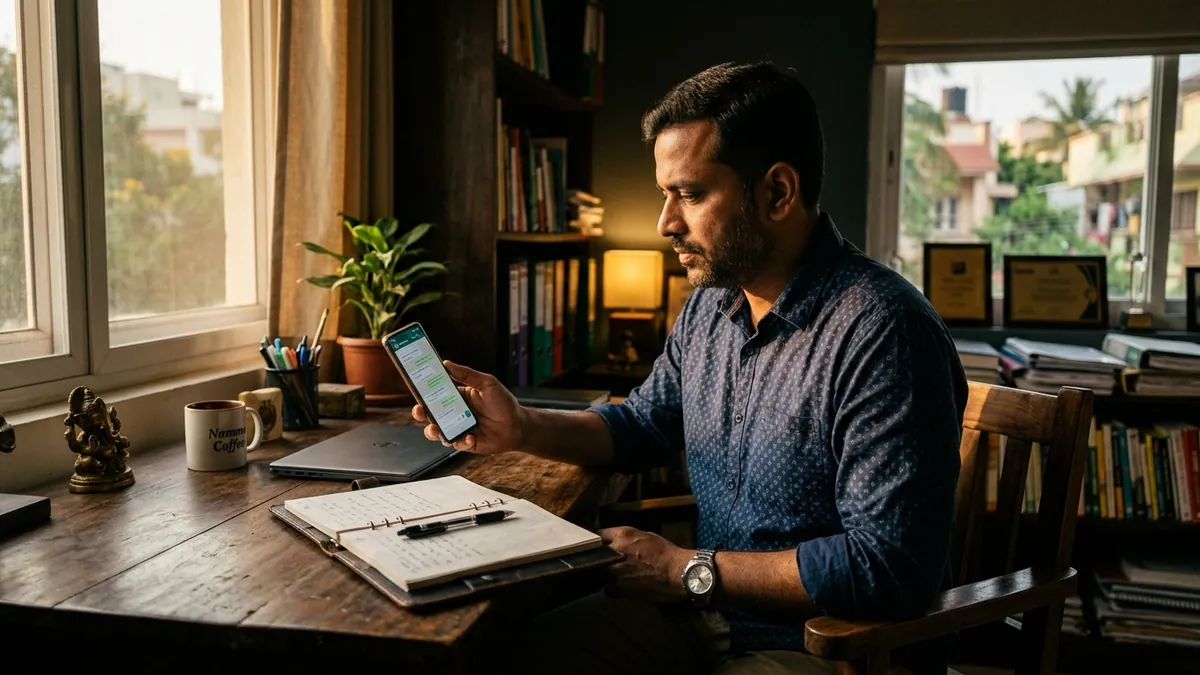
Most business owners I meet are not struggling to get enquiries. They get calls, WhatsApp messages, walk-ins, maybe even website form fills. The real problem is that most of those enquiries go nowhere. The person asks for a price, says they'll think about it, and disappears. The owner then blames the economy, the competition, or the customer's budget. But in most cases, the problem is much closer to home.
Here is what I have noticed after working with manufacturers, service businesses, retailers and B2B founders across India — the gap between an enquiry and a sale is not a price gap. It is a trust and clarity gap. The prospect does not clearly understand what they are getting, who they are buying from, or why you are the right choice over someone cheaper. When those three things are unclear, they default to comparing prices. And you lose.
The first blocker is response time. I have seen businesses where a prospect sends a WhatsApp enquiry at 11 AM and gets a reply the next afternoon. By then, the person has already spoken to two or three competitors. First response time matters enormously in India's market. If you can respond within 30 minutes with something useful — not just 'yes please share your requirement' — you already have an advantage over 70% of your competition.
The second blocker is how you communicate your offer. Most founders explain their product or service the way they understand it — in technical terms, in features, in specifications. But the customer is thinking in outcomes. They want to know what problem gets solved, how quickly, and whether they can trust you to deliver. If your first response to an enquiry is a price list or a brochure PDF, you are skipping the entire trust-building step. I always tell founders — your first response should answer the customer's real question, which is: 'Can this person actually help me?' If you're unsure how well your current messaging builds that trust, a brand analysis can reveal exactly where prospects are losing confidence.
The third blocker is the follow-up — or the lack of it. Most Indian small business owners follow up once, maybe twice. If the customer doesn't respond, they assume the deal is dead and move on. But data across industries consistently shows that many deals close on the fifth or sixth follow-up. The follow-up doesn't have to be pushy. It can be a useful update, a case study, a question about their timeline, or simply checking in. A structured follow-up process — even a basic one on a spreadsheet or CRM — can recover 20 to 30 percent of enquiries that would otherwise go cold.
The fourth blocker is one that rarely gets talked about: the customer journey after the enquiry. What happens when someone says they are interested? Is there a clear next step you guide them toward — a site visit, a sample, a discovery call, a proposal? Or does the conversation just end with 'let me know if you want to proceed'? Ambiguity kills deals. The prospect needs to know exactly what happens next, and you need to be the one who tells them. I covered this kind of gap in detail during my 2-day business growth workshop and founders are often surprised at how much revenue slips through unclear next steps.
There is also a confidence issue that founders rarely admit. When a salesperson or even the founder themselves is not fully confident about the value of what they are selling, that hesitation shows. It shows in how they quote prices — apologetically, with too many discounts upfront, or by asking 'what is your budget' before establishing any value. Confidence in selling comes from knowing your product deeply, knowing who it serves best, and having a few solid customer success stories ready to share. If you can say 'we helped a company like yours solve exactly this problem,' the conversation shifts entirely.
If you are an MSME founder and you recognize these patterns in your own business, the fix is not to run more ads or hire more salespeople. The fix is to audit your conversion process from the first enquiry to the closed deal. Where are people dropping off? What are they saying — or not saying — before they go silent? Sometimes spending 90 minutes on a one-to-one consultation to map this out can show you exactly which one or two changes will move the needle. I have seen businesses double their conversion rate simply by changing how they respond to the first enquiry and adding one structured follow-up step.
Enquiries are not the problem. Most Indian businesses can generate interest. The money is in what happens next — how you respond, how you build trust, how you guide the customer toward a decision. Work on that, and your revenue will grow without needing to spend more on marketing.
Want to understand where your business growth is stuck?
Book a Business Growth Diagnostic with Abhijit JK — an honest, focused 60-minute one-to-one session with Abhijit JK on your brand, website and growth.
Book a Business Growth Diagnostic