Why Your Local Business Does Not Show Up on Google Maps
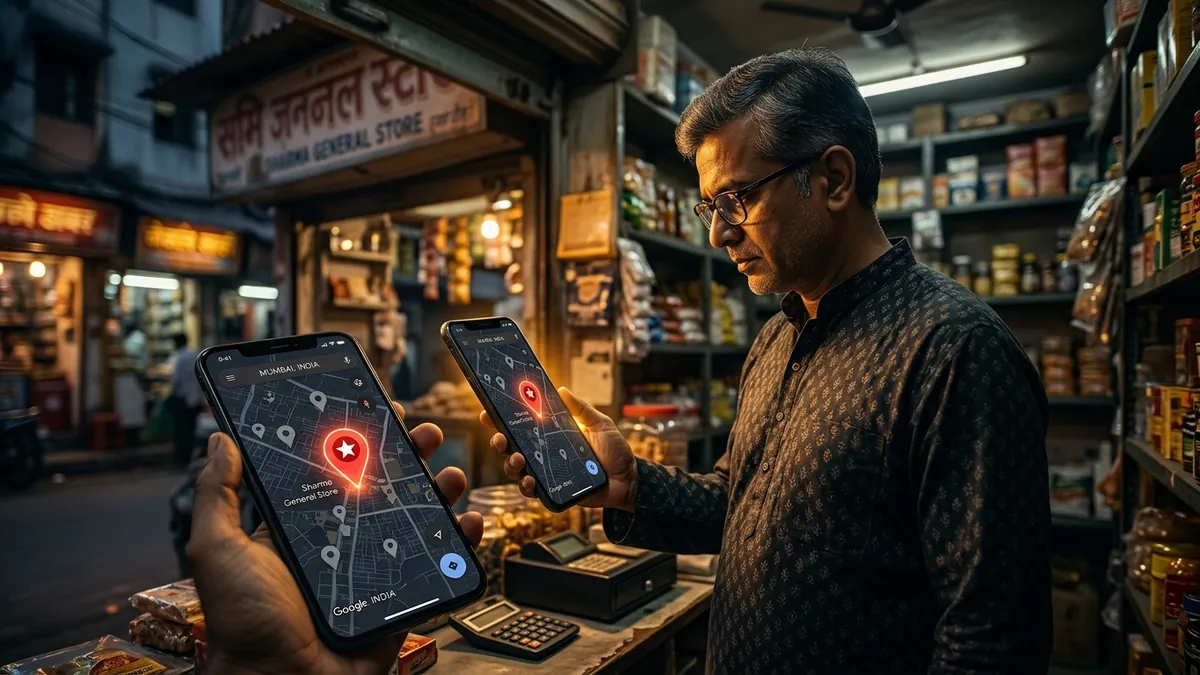
A garment manufacturer in Tiruppur called me last year with a simple complaint. His competitor, who had been in business for fewer years and had a smaller factory, was getting more calls from buyers in his own city. When I asked him to search for his product category on Google Maps, his shop did not appear in the first ten results. His competitor was listed at the top with photos, reviews and a phone number. That one difference was costing him real business every week.
Most business owners I meet assume that having a Google Business Profile means they will automatically show up on Maps. That is not how it works. Google decides which businesses to show based on three things: relevance, distance and prominence. If your profile is incomplete, inactive or inconsistent with your website, Google simply does not trust it enough to show it to people searching nearby. The algorithm is cautious. It only promotes businesses it is confident about.
The first thing I check during a local SEO review is whether the business name, address and phone number are exactly the same everywhere — on the Google Business Profile, on the website, on Justdial, on IndiaMART, on any directory the business has listed itself. Even a small difference like 'Road' versus 'Rd' or a different mobile number on different platforms creates a signal mismatch. Google sees inconsistency and pulls back. It sounds small but I have seen this single issue suppress a profile for months.
The second problem is almost always photos and activity. A profile with no photos, no posts and no recent updates looks abandoned to Google. I tell founders to treat their Google Business Profile like a slow social media account. Post one update every two weeks. Add new photos of your premises, your team, your products or your work. If you run a service business, post a before-and-after or a short project description. Google tracks activity and rewards profiles that show signs of a functioning, real business. This takes twenty minutes a month and most people skip it entirely.
Reviews are the third lever most Indian businesses ignore. When I ask business owners how many Google reviews they have, the typical answer is five or six, all from three years ago. Meanwhile their competitor has forty reviews, including recent ones. Google uses review quantity, recency and response rate as a trust signal. Start asking satisfied customers directly — not with a mass WhatsApp blast, but individually. Send the Google review link personally. A flooring contractor I worked with went from eight reviews to thirty-four in six weeks just by sending a voice note to past clients asking for a quick review. His Maps ranking improved noticeably within a month.
Category selection matters more than most people realise. Your primary category on Google Business Profile should match exactly what people search for, not what you want to be known as. A printing company that selects 'Marketing Agency' as its category because it also does branding work is confusing Google. Select the most specific, accurate primary category first. Then add secondary categories. If you are unsure which category is right for your business, search for your top competitors on Maps and check what categories they are using. If this kind of audit feels overwhelming to do alone, a one-to-one consultation can help you work through it with a clear checklist.
Local landing pages on your website also directly affect Maps ranking. If your website has no page that mentions your city, your area or your service in the context of a specific location, Google has less to connect your profile to. A real estate consultant in Pune had a beautiful website but not a single mention of 'Pune' in any page heading or paragraph. We added a simple service page with the city name, nearby localities and the kind of clients she worked with. Within six weeks her profile began appearing in the local pack for searches she had never ranked for before. Your website and your Maps profile work together. Treat them as one system.
One thing I cover in detail during business growth workshops is how to build what I call a local trust stack — the combination of a complete profile, consistent NAP data, fresh photos, recent reviews and a locally-relevant website page all working together. None of these individually is enough. But when all five are in place, Google starts to see your business as a reliable, active local entity worth recommending. Most competitors in your city are missing at least three of these five elements. That gap is your opportunity.
If you are a founder running a local business in any Indian city, do this today: search for your own business category on Google Maps from your phone. See where you appear. Then look at who is appearing above you and check their profile carefully — their photos, their reviews, their last post date, their categories. That ten-minute exercise will show you exactly what is holding your profile back. The fix is almost never expensive. It is almost always just incomplete groundwork that nobody told you to do when you first set up your listing.
Want to understand where your business growth is stuck?
Book a Business Growth Diagnostic with Abhijit JK — an honest, focused 60-minute one-to-one session with Abhijit JK on your brand, website and growth.
Book a Business Growth Diagnostic

