Why Rebranding Without Clarity Always Fails
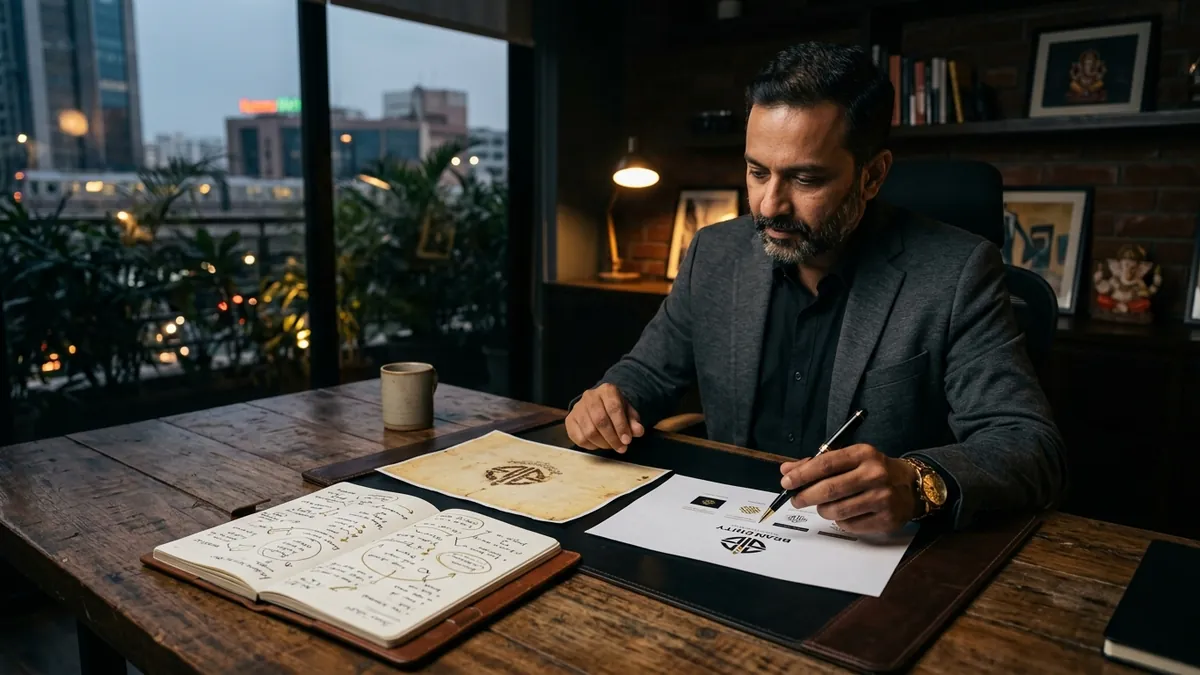
Most business owners I meet who want to rebrand say the same thing. 'We need a fresh look.' 'Our logo feels old.' 'We want to look more premium.' I understand the feeling. But almost none of them have asked the more important question first — what is our brand actually saying right now, and is that the problem?
A rebrand is not a bad idea. Sometimes it is exactly what a business needs. But rebranding is the solution to a specific problem — not a general cure for slow growth, low margins or confused customers. I have seen manufacturers in Bengaluru and Pune spend three to five lakhs on a full brand overhaul, new logo, new website, new packaging. Six months later, nothing changed. Not the enquiry quality, not the conversion rate, not the customer perception. Because the real problem was never the visual identity. It was that nobody — including the founder — could clearly explain what made their business different from the competitor next door.
This is what I call a clarity problem. And clarity has to come before any design decision. Clarity means you can answer three questions without hesitation. Who exactly is your customer? What specific problem do you solve for them? Why should they choose you over the other options available to them right now? If your answers are vague — 'we serve everyone,' 'we provide quality,' 'we have experience' — then a new logo will not fix that. You are just putting a fresh coat of paint on a wall that has no foundation.
I have done brand analysis for businesses across industries — textiles, food processing, IT services, professional services, retail. The pattern is the same. The rebrand was triggered by an emotional moment. A competitor launched a slick new website. The founder attended an industry event and felt their brochure looked dated. A big client gave an offhand comment about the brand feeling 'small.' These are real triggers, but they are emotional ones. The decision to rebrand should be strategic, not reactive.
There are legitimate reasons to rebrand. If your business has genuinely shifted — you are moving upmarket, entering a new segment, dropping a product line that was defining you wrongly, or recovering from a reputation issue — then a rebrand makes sense. If your visual identity was built five years ago when you were a one-person consultancy and now you have forty people and enterprise clients, yes, the brand should evolve. But even in these cases, the rebrand must start with a written positioning brief, not a mood board. What do you want to be known for? Who needs to trust you? What does trust look like to that specific buyer?
The businesses that get rebranding right do it in a sequence. First, they get clear on positioning — what they stand for, who they serve, what makes them credibly different. Then they build the message — how they talk about themselves in a way that resonates with that specific customer. Then and only then do they update the visuals to reflect that position and message. If you reverse this sequence — visuals first, message later — your new brand will look different but feel exactly the same as before. Customers will not notice. Enquiry quality will not improve. And you will be tempted to rebrand again in three years.
If you are not sure whether your business has a clarity problem or a visual problem, I run a business growth diagnostic that helps founders separate the two. Many times what looks like a branding problem is actually a positioning problem. And positioning work costs a fraction of a full rebrand — but delivers far more value because it sharpens your sales conversation, your marketing message, your hiring pitch and your pricing rationale all at once.
One thing I tell every founder before they commission a rebrand: write down your current brand message in two sentences. Not your tagline. Your actual message — what you do, who you do it for, and why it matters to them. If you struggle to write it, or if five different people in your team write five different things, that is your diagnosis. The problem is not your logo. The problem is that your brand has no clear point of view. Fix that first. The visual work will be faster, cheaper and far more effective when you do.
If you want to think this through before committing to a rebrand budget, a one-to-one consultation is a good starting point. We can look at what your brand is currently communicating, where the gap is, and whether a rebrand is actually what you need — or whether a sharper positioning and messaging overhaul will get you further for less. Most founders leave that conversation with more clarity than they expected — and a clearer sense of exactly where to spend.
Want to understand where your business growth is stuck?
Book a Business Growth Diagnostic with Abhijit JK — an honest, focused 60-minute one-to-one session with Abhijit JK on your brand, website and growth.
Book a Business Growth Diagnostic