Why Your Brochure Gets Read But Never Followed Up
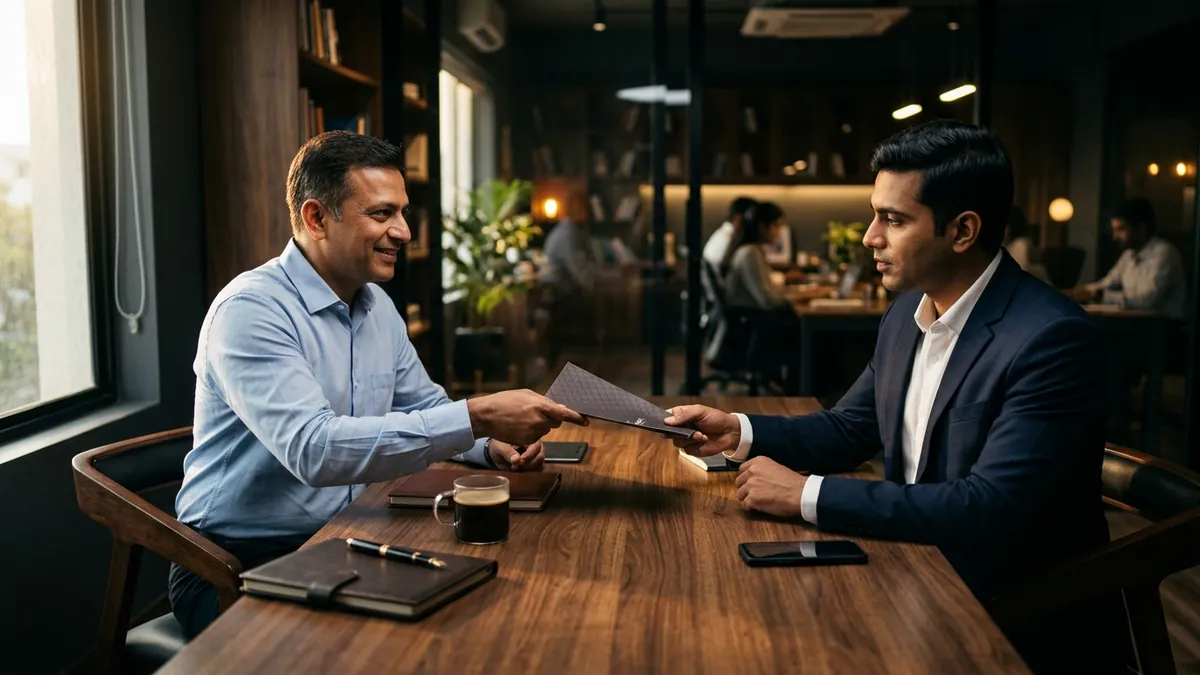
Most business owners I meet have a brochure they are genuinely proud of. It has good printing, decent photos, a full list of products or services, and the company history on the back. They carry it to every meeting, hand it out at exhibitions, leave a stack at the reception counter. And then nothing happens. Buyers read it, fold it, put it in a bag, and never call. The brochure becomes a very expensive piece of paper.
The first problem is that most brochures are written for the business owner, not the buyer. You have listed what you do, how long you have been in business, how many cities you serve, what certifications you hold. All of that matters to you. But the buyer sitting across the table has one question in their head: what problem does this solve for me? If your brochure does not answer that in the first ten seconds of reading, they move on. Not because they are not interested, but because you made them work too hard to find the reason to care.
The second problem is the absence of a clear next step. I have seen beautifully designed brochures that end with just a phone number, an email address and a website link. No instruction. No reason to act now. No specific offer or call to action. The buyer finishes reading and thinks, okay, they seem fine, and then goes about their day. A brochure without a next step is like a salesperson who gives a full pitch and then just stands there silently. Someone has to close the conversation.
Service businesses and manufacturers both make this mistake, but in different ways. Manufacturers tend to fill every panel with product specifications, technical drawings and capacity numbers. That information has its place, but it belongs deep in the conversation, not on the first page. The front of your brochure should earn attention, not recite a catalogue. Service businesses, on the other hand, tend to write in vague language about excellence, quality and customer satisfaction. Buyers have seen those words a thousand times and they mean nothing without proof behind them.
Here is what actually works. Lead with the buyer's situation. Open with a sentence that makes the reader think, yes, this is exactly what I am dealing with. Then show your solution briefly and clearly. Follow that with one or two real outcomes — a result you delivered for a client, a number, a before-and-after. Keep visuals honest and specific, not generic stock imagery. And end every brochure with one clear action — book a call, request a sample, visit the showroom this week. Give them a reason connected to something real, not just a standing invitation that can be taken up any time and therefore never is.
Format also plays a bigger role than founders expect. A brochure that tries to say everything ends up communicating nothing. If you have five product lines, you do not need one brochure for all five. You need five focused one-pagers that can be handed selectively based on what the buyer actually needs. In my experience working with manufacturers and service businesses across Karnataka and beyond, the businesses that simplified their sales material almost always saw more follow-up enquiries than those who went heavier and more comprehensive. Less content, more clarity.
Another thing worth checking — does your brochure match what your buyer sees when they look you up online? If your brochure says one thing and your website or Google listing says something different, buyers sense the inconsistency without being able to name it. Trust quietly breaks. This is the kind of alignment issue I work through in a one-to-one consultation with founders who are trying to fix their sales material without starting from scratch. Often, the brochure is not the only thing that needs fixing. It is a symptom of a broader clarity problem.
If you are heading to an exhibition, a trade meeting or a B2B pitch in the next few weeks, sit down with your current brochure and ask three questions. One — does this tell the buyer what problem I solve in the first paragraph? Two — does this give them one specific next step? Three — would a stranger who picked this up know exactly who this is for and why they should call? If the answer to any of those is no, do not reprint. Rewrite first. Printing more copies of a brochure that does not work only wastes more money. If you want a structured way to rethink your business communication and sales material, the business growth workshops I run are a practical starting point for founder teams who are serious about fixing this.
The brochure is one of the oldest marketing tools in business and it still works — when it is written for the buyer, designed to guide a decision and built around one clear action. Most founders have not been shown how to do that. They copied what they saw others do, or let a printer's template decide the structure. The good news is this is a fixable problem. It does not need a big budget. It needs clarity about who the buyer is, what they care about and what you want them to do next. Get those three things right and your brochure will start pulling its weight.
Want to understand where your business growth is stuck?
Book a Business Growth Diagnostic with Abhijit JK — an honest, focused 60-minute one-to-one session with Abhijit JK on your brand, website and growth.
Book a Business Growth Diagnostic