Why Your Business Card Still Loses You the Deal
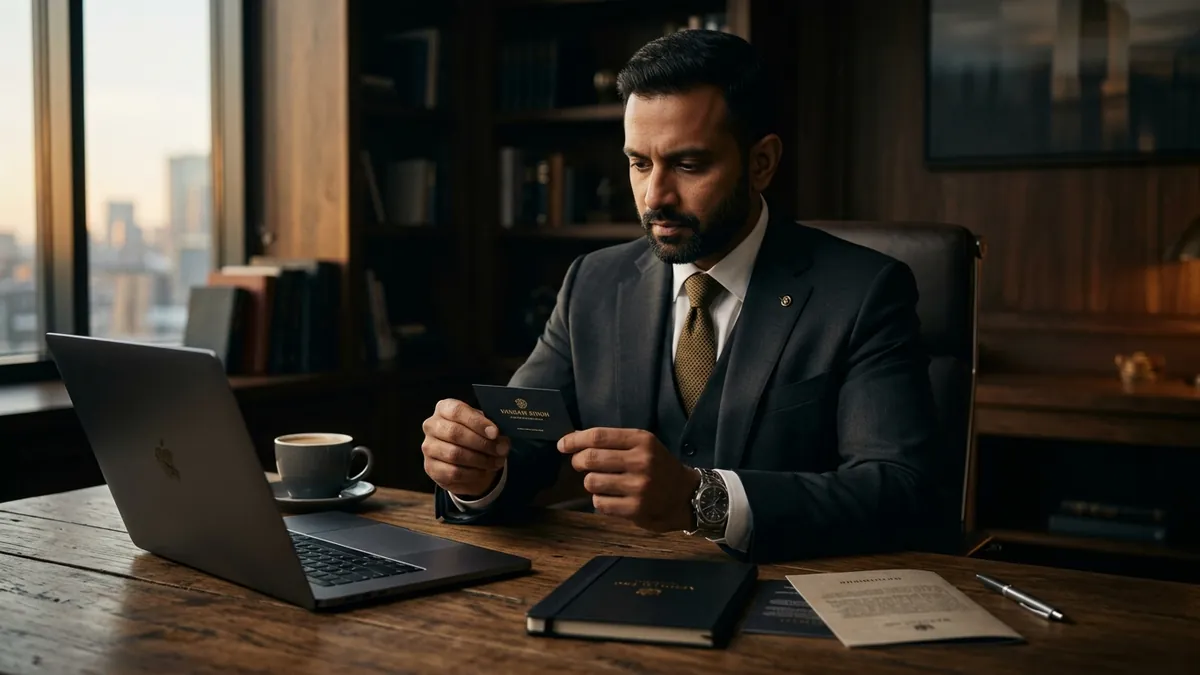
You met the right person at an event. The conversation was good. They asked for your card. You handed it over. They glanced at it, said 'I'll call you', slipped it into their pocket — and you never heard back. Most business owners I meet blame the follow-up. I usually blame the card.
A business card is not just contact information printed on paper. It is a physical sample of how seriously you take your own brand. When someone holds your card, they are forming an opinion about your business in about three seconds. That opinion goes with them when they walk away from you. If the card feels thin, looks cluttered, has a Gmail address, or was clearly designed using a free online tool — that impression sticks. It works against everything you said in the conversation.
The most common mistake I see is founders trying to put everything on the card. Two phone numbers, a WhatsApp number, three email addresses, a website, social handles, a tagline, a QR code, a list of services, and sometimes a small photo. The card ends up looking like a classified ad. The person reading it does not know where to look first. A business card should do one job — make the other person want to reach out to you. That means one name, one number, one email, one website. That is it.
The second mistake is font and colour choices that do not match anything else in the business. I have seen business owners with a clean, well-designed website hand over a card with a completely different colour palette, a different font, and a different logo version. It creates a subtle disconnect in the mind of the person receiving it. They do not consciously notice it, but it makes your brand feel inconsistent and less trustworthy. This is exactly the kind of problem that shows up when you do a proper brand analysis — the touchpoints are not talking to each other.
Paper stock matters more than most founders think. A flimsy 250 GSM card from a local print shop sends a very different signal than a 400 GSM matte laminated card with a spot UV finish. I am not saying you need to spend a fortune. I am saying the physical weight and texture of a card communicates something before the person even reads the words on it. Premium clients notice this. Vendors notice this. Investors notice this. The card is the handshake that continues after you leave the room.
Many business owners also make the mistake of keeping the back of the card completely blank. This is a missed opportunity. Not to cram in more information, but to reinforce one clear brand message. It could be your core positioning line. It could be a clean visual of your product or service. It could simply be your brand colour filling the entire back surface. Something that makes the card worth keeping rather than discarding. I have worked with manufacturers and service businesses where a simple redesign of both sides of the card — with better hierarchy and the right paper — changed how prospects perceived them in the first meeting.
If you are not sure whether your current card is working for or against you, the honest test is this — take it out right now and look at it like a stranger would. Does it look like it came from a business that knows what it is doing? Is the typography clean? Does the email address use your domain name? Does the card design match your website and your social presence? If the answer to any of these is no, that card is quietly costing you deals. A one-to-one consultation is often where I help founders audit these small but important brand touchpoints together.
Fixing your business card is not a big project. It takes one afternoon with a good designer who understands your brand, one round of proofs, and one decent print run. The cost is small. The impact on first impressions is not. Most business owners delay this because it does not feel urgent. But every meeting where you hand over a card that undercuts your own brand is a small tax on your credibility. Pay it enough times and it adds up.
If you have been meaning to clean up your brand materials but do not know where to start, begin with the card. It is the one thing a prospect takes away from a meeting with you. It represents your brand when you are not in the room. Make it earn that responsibility. And if the card problem is a symptom of something bigger — inconsistent identity across your website, brochures, social and packaging — it might be time to look at the full picture through a business growth diagnostic and build the visual identity your business actually deserves.
Want to understand where your business growth is stuck?
Book a Business Growth Diagnostic with Abhijit JK — an honest, focused 60-minute one-to-one session with Abhijit JK on your brand, website and growth.
Book a Business Growth Diagnostic