Why Your Business Depends on One Person to Run Everything

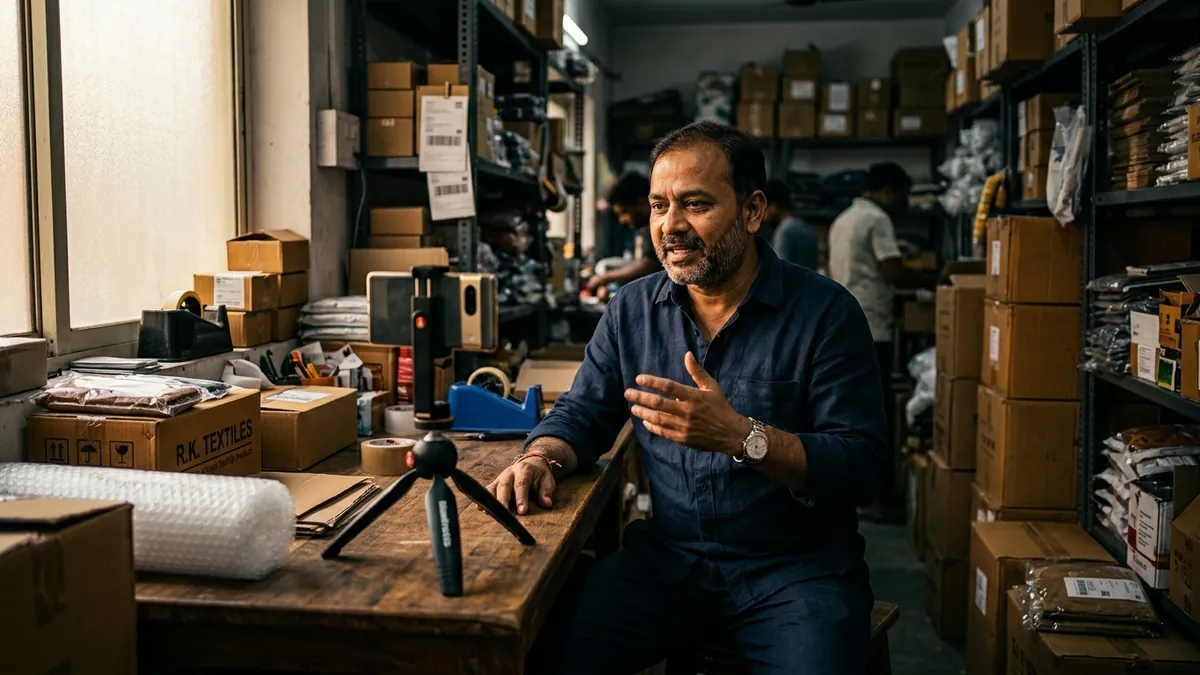
Most business owners I meet in Bengaluru, Surat, Coimbatore and Ludhiana share one invisible problem. The business runs on them. Every decision, every client call, every vendor negotiation, every Instagram post, every invoice — all of it flows through the founder. The business looks like it is growing. But actually, it is just the founder running faster and faster on a treadmill.
This is not a hustle problem. It is a structure problem. And it shows up in very specific ways. The founder cannot take a holiday without their phone blowing up. A key team member leaves and the whole operation slows down. A big order comes in and instead of feeling excited, the founder feels anxious because they do not know how they will manage it. If any of this sounds familiar, you are running a one-person-dependent business — even if you have ten employees.
I have seen this pattern with manufacturers especially. The factory owner knows every machine, every supplier, every customer personally. He has been doing this for twenty years. The business exists because of his relationships and his knowledge. But when his son joins or he tries to hire a sales manager, nothing works because all the information is locked inside his head. There is no process, no document, no system. Just his memory and his mobile phone contacts.
The same thing happens with service businesses — clinics, architecture firms, digital agencies, consultancies. The senior person is the brand. Clients come because of them. The moment they step back, clients feel the quality has dropped. Revenue is directly tied to the founder's availability. This feels like a compliment. It is actually a trap. If you want to understand the deeper reasons your revenue is stuck despite working harder, a business growth diagnostic is a good place to start looking honestly at where the bottleneck actually sits.
So how do you begin to untangle this? The first step is to write down everything only you are doing right now. Not what you should be doing. What you are actually doing every week. Most founders are shocked when they see the list. Sales, vendor calls, HR decisions, social media, quality checks, accounts follow-up, customer complaints, team motivation — all of it lands on one desk. The second step is to separate the list into three categories: things only you can do because of your expertise or relationships, things someone else can do with the right process, and things that should not be done at all because they are wasting your time.
The middle category is where your freedom lives. These are the tasks you are doing because there is no system or no trained person — not because you are truly the only one who can do them. Most founders are surprised to find that 60 to 70 percent of their daily work falls into this bucket. Quotation follow-up, vendor coordination, basic customer service, social media posting, order tracking — all of this can be handed over if there is a clear process written down. Not a fancy SOP document. Just a simple step-by-step note that another person can follow without asking you every five minutes.
Hiring is not the full answer either. I have watched founders hire three people to solve a workload problem and still feel more burdened after six months. Because the problem was never really about headcount. It was about the absence of clear roles, clear handovers and clear decisions. When roles are vague, everything escalates back to the founder. Every small doubt, every customer complaint, every supplier delay lands on your phone again. You end up managing your employees more than you are running your business. This is also one of the core things we work through in a one-to-one consultation — figuring out what you actually need to let go of and how to do it without the business falling apart.
The founders who successfully reduce this dependency do one thing consistently. They make their knowledge portable. They record how things are done. They document the decisions they make and why. They build a rhythm — weekly check-ins, standard reports, clear approval limits for the team. It takes three to six months of deliberate effort. It is uncomfortable because it feels slower at first. But on the other side of that effort is a business that can grow beyond what one person can physically handle. And that is the only real path to scale for an Indian MSME that wants to last beyond one generation.
If you are a founder reading this and recognising yourself in every paragraph, you are not alone and this is not a personal failure. It is almost inevitable when you build something from scratch with limited resources. The business needed you to be everything in the beginning. The problem is that most founders never consciously redesign the business once it is stable enough to need less of them. That redesign does not happen automatically. Someone has to decide to start it. That someone is you. The good news is that it does not require a big investment or a consultant army. It starts with one honest afternoon looking at what you are actually doing and asking — does this really need me?
Want to understand where your business growth is stuck?
Book a Business Growth Diagnostic with Abhijit JK — an honest, focused 60-minute one-to-one session with Abhijit JK on your brand, website and growth.
Book a Business Growth Diagnostic