Why Your Business Runs You Instead of You Running It

Most business owners I meet are exhausted. Not because they are lazy. Because they are doing five jobs at once — sales, operations, vendor follow-ups, customer complaints, accounts — and somehow still expected to think about growth. They started the business to build something of their own. A few years in, the business owns them.
This is not a motivation problem. It is a structure problem. When a business is built around one person's availability, it cannot grow beyond that person's capacity. Every decision waits for the founder. Every problem lands on the founder. The business does not have a system — it has a single point of failure. That person is you.
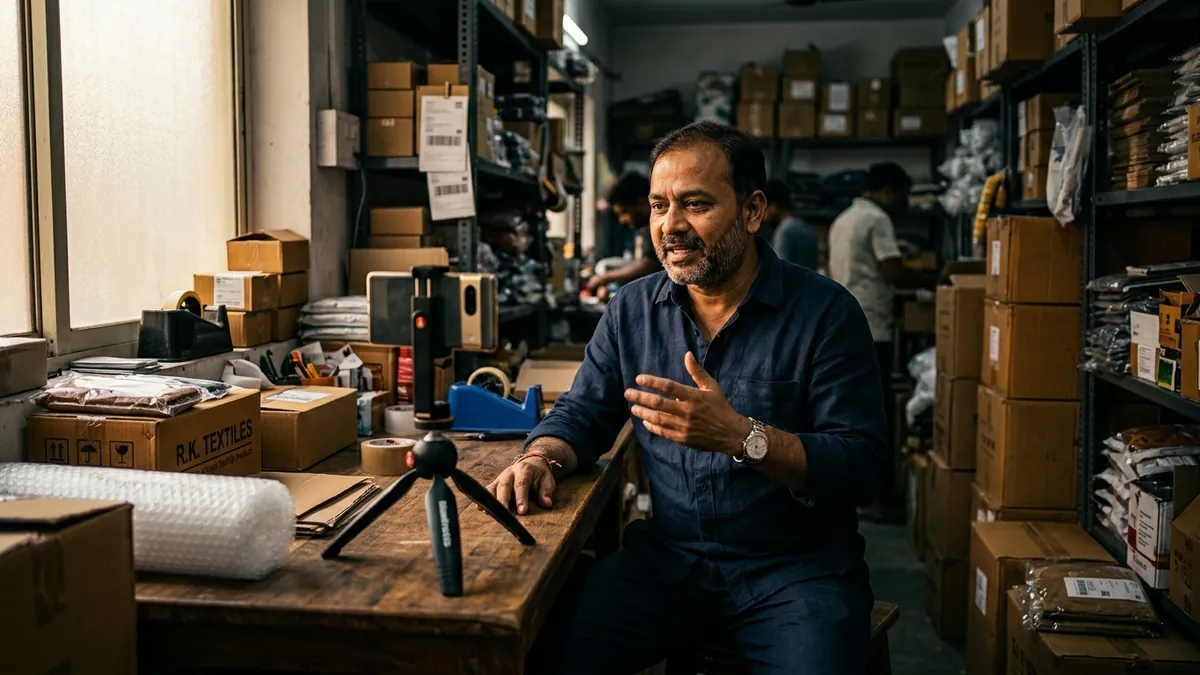
I have seen this most clearly with manufacturers. The owner is on the shop floor at 7 AM, taking client calls by noon, approving payments in the evening, and answering WhatsApp messages until midnight. They are busy every single day. But ask them where the business will be in three years and they go quiet. There is no answer because there is no plan. There is only today's fire to put out.
The root cause is almost always the same — the founder never separated the role of owner from the role of operator. In the early days, you had to do everything yourself. That made sense. But most founders never make the transition. They keep operating even after the business grows, because the business was never built to run without them. No documented processes. No clear ownership for team members. No way for someone else to make a decision without checking with the boss first. If this sounds familiar, a business growth diagnostic can help you see exactly where the bottlenecks sit.
Here is what happens next if nothing changes. The business hits a ceiling — usually somewhere between 1 and 5 crore in revenue — and stays there. The founder cannot take on more because there are no more hours in the day. The team does not grow because they are never trusted with real responsibility. And slowly, good people leave, because nobody wants to work in a place where every move needs approval from the top. You end up with a team of order-takers, not problem-solvers.
The way out starts with one honest question: what are you doing this week that someone else could be doing with the right training and a clear process written down? Most founders, when they actually sit with this question, realise they are holding onto tasks not because they are critical, but because handing them over feels risky. That risk is real but manageable. The bigger risk is staying exactly where you are. I work through this with founders directly in a one-to-one consultation — it usually takes one focused session to identify the top three things you need to stop doing yourself.
Start small and concrete. Pick one recurring task that happens at least once a week — approving a vendor payment, responding to a type of customer query, following up on a delivery. Write down exactly how you do it. Every step. Then train one person to do it your way. Watch them do it twice. Then let them own it. This sounds basic. Most founders have never done it for even five tasks. When you do it for twenty tasks over three months, your week looks completely different.
The other thing founders avoid is measuring the right things. Most are watching revenue. But revenue is a lagging number — it tells you what already happened. What you need to watch are the leading indicators: how many qualified enquiries came in this week, how many were converted, how fast orders are being fulfilled, what is the repeat purchase rate. When your team knows these numbers and owns them, they start thinking like owners too. If you want to work through your numbers and growth levers properly, the 2-day business growth workshop is built exactly for this — for founders who are ready to step back and think clearly about the whole business.
Running a business is supposed to get easier as it grows, not harder. If your business is getting more chaotic with every passing year, that is a signal worth taking seriously. It does not mean you are doing something wrong. It means the way the business is structured needs to change. You built something real. Now build it so it can grow without needing you in every room at every hour. That is the actual job of a founder.
Want to understand where your business growth is stuck?
Book a Business Growth Diagnostic with Abhijit JK — an honest, focused 60-minute one-to-one session with Abhijit JK on your brand, website and growth.
Book a Business Growth Diagnostic