Why Your Content Calendar Never Survives Month Two

Most business owners I meet have tried a content calendar at least once. They sat down over a weekend, filled a spreadsheet with post ideas, maybe colour-coded it by content type, and felt genuinely good about it. By week three, real work took over. A client escalation, a supplier issue, a delayed shipment. The calendar sat untouched. By month two, it was gone. Not deleted — just quietly abandoned. This is not a discipline problem. It is a design problem.
The way most founders build content calendars is borrowed from large marketing teams. A dedicated social media manager, a graphic designer, a copywriter, weekly review meetings. That system makes sense when you have five people running content. It collapses completely when you are a founder managing operations, sales and client delivery at the same time. The calendar becomes one more thing you are behind on, and the guilt of being behind makes you avoid it even more.
The real reason content calendars fail is that they are built for volume, not for reality. Founders plan 20 posts a month thinking that is what consistency looks like. But 20 posts for a solo founder or a small team means content creation almost every single day. Even professional content teams find that exhausting. For a business owner in Bengaluru running a manufacturing unit or a services firm, it is simply not sustainable. The calendar does not fail because you are lazy. It fails because the target was wrong from the start.
I have seen this pattern with manufacturers, consultants, retail shop owners and service businesses across India. The ones who stay consistent on Instagram or LinkedIn are not posting more. They are posting smarter. Most of them are working with eight to twelve posts a month — roughly two to three per week — built around a small set of repeating content types. Process posts. Customer results. Behind-the-scenes. One strong opinion or insight. That rotation keeps things predictable enough to execute without needing a full team.
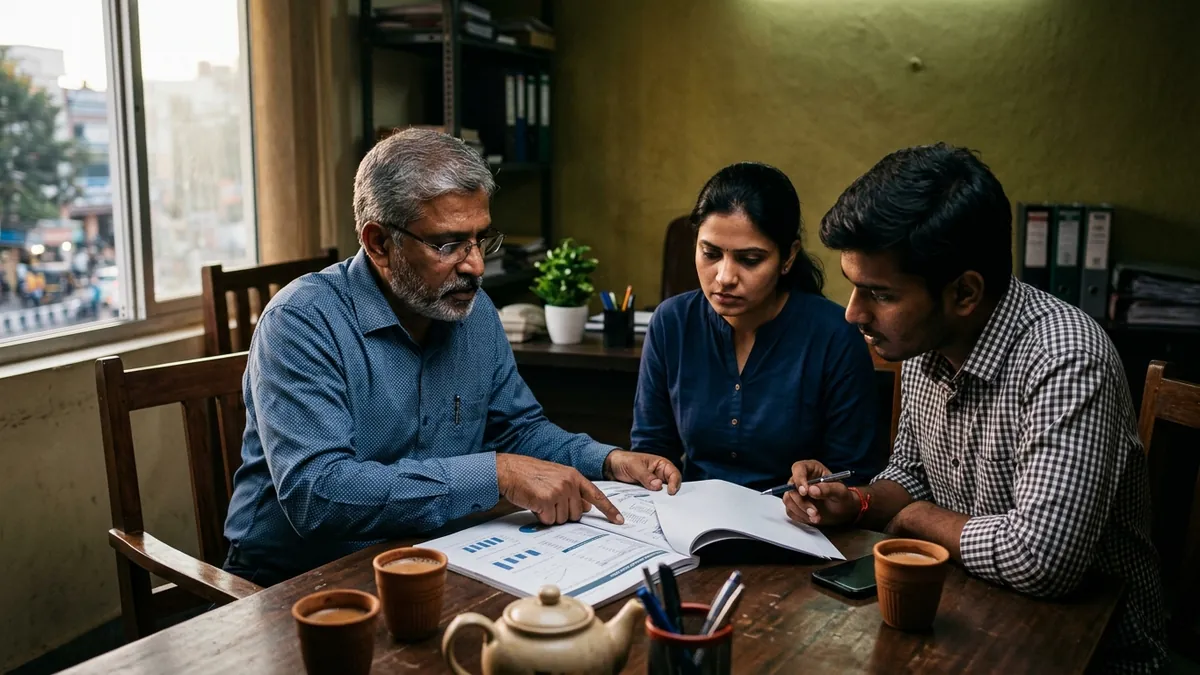
Here is the practical fix I give founders when we work through this in a one-to-one consultation. Stop planning a full month ahead. Plan ten days at a time. Choose three content types you will rotate through — something that shows your work, something that shows your thinking, something that shows the people behind the business. Write five ideas for each type. That gives you fifteen ideas to draw from in any given stretch. On the days you have energy and twenty minutes spare, create two or three pieces. Bank them. On the days you are slammed, post from what you saved. This is not a content calendar. It is a content buffer, and it is far more honest about how founders actually live.
Batch creation is the other shift that changes everything. Most founders try to think of an idea, write the caption, design the visual and post — all in one sitting, every single time. That process has too many decision points. It drains energy. Instead, pick one Saturday morning every two weeks and do only idea and caption work. No designing, no posting. Just write. Then on a separate day, turn those captions into visuals. You are not multitasking. You are moving through one type of thinking at a time, and the output per hour goes up significantly. If you want to go deeper into how to structure this for your specific business, the business growth workshops I run cover exactly this kind of operating system for founders.
Platform choice also kills content calendars quietly. Founders try to be on Instagram, LinkedIn, Facebook and sometimes YouTube simultaneously. Each platform needs different formats, different tones, different posting logic. For most Indian MSMEs, one platform done consistently is worth more than four platforms done poorly. Pick the platform where your actual buyers spend time. For B2B service businesses and manufacturers, LinkedIn is usually the right answer. For retail, food, interiors and lifestyle categories, Instagram tends to work better. Once you are consistent on one, you can think about expanding. Not before.
The other thing that breaks content calendars is not having a content library. When you sit down to post and have nothing saved — no photos, no old project images, no screenshots of good feedback — you are starting from zero every time. That is exhausting. I tell founders to spend one hour this week going through their phone and pulling out the last three months of work photos, WhatsApp messages from happy clients, before-and-after shots, anything that documents real work. Move them into one folder. Label it. That folder is your raw material. You will never be completely stuck again once you have it.
Consistency on social media is not about being everywhere or posting every day. It is about showing up reliably enough that the right people remember you exist when they need what you do. Eight good posts a month, done every month for a year, will build more trust and more enquiries than a burst of thirty posts followed by two months of silence. The goal is not to go viral. The goal is to stay visible to the people who are already watching. If you are not sure where to start or want someone to look at your specific situation, feel free to contact me directly. Sometimes one honest conversation is enough to get the whole thing moving.
Want to understand where your business growth is stuck?
Book a Business Growth Diagnostic with Abhijit JK — an honest, focused 60-minute one-to-one session with Abhijit JK on your brand, website and growth.
Book a Business Growth Diagnostic