Why Your Business Gets Enquiries But Loses Them to a Competitor
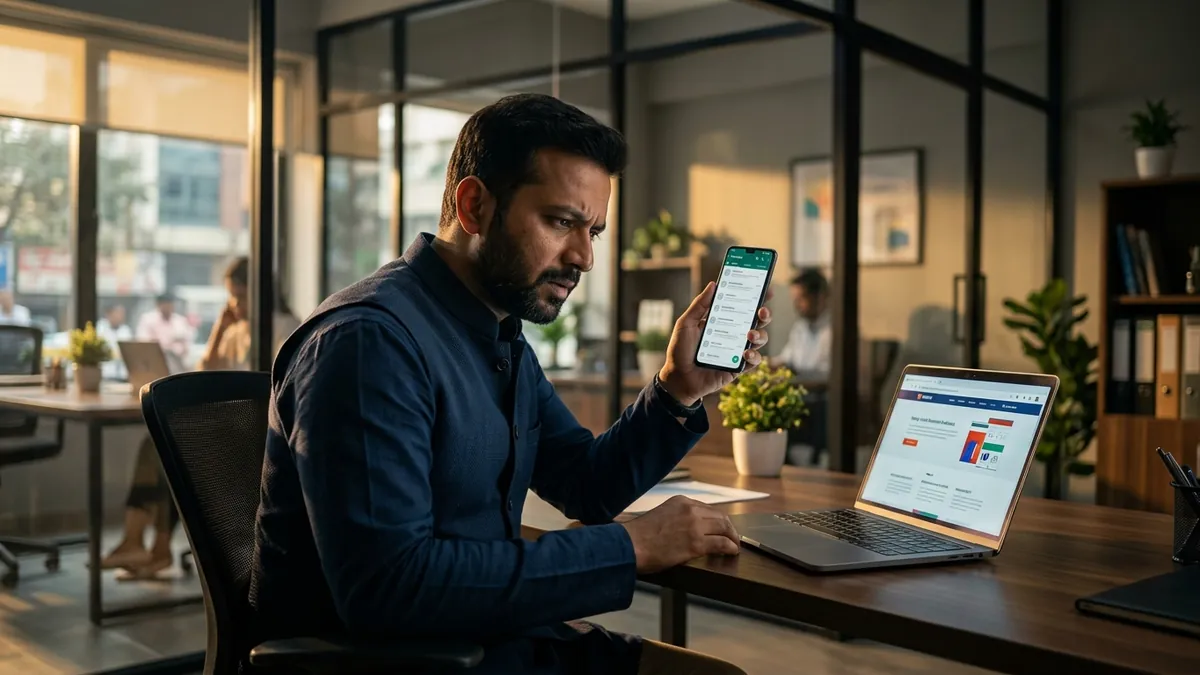
Most business owners I meet are not struggling to get enquiries. They are struggling to keep them. A customer calls, sends a WhatsApp message, or fills a contact form. Then, two days later, that same customer is buying from someone else. The owner says 'the market has no loyalty.' I say — let us look at what happened between the enquiry and the decision.
The first thing I check is response time. In India, most purchase decisions — especially for services, custom products or B2B orders — happen within a window of 24 to 48 hours after the first enquiry. If your response comes on day three, the customer has already moved on. They did not choose your competitor because the competitor was better. They chose them because the competitor picked up faster. Speed is a brand signal. A slow response tells the customer: we are not organized, or you are not a priority.
The second issue is how you respond. I have seen this with manufacturers and service businesses across categories — the first reply is either a generic 'please share your requirement' or a price quote with no context. Both kill the conversation. 'Please share your requirement' puts the burden back on the customer who already told you what they want. A bare price quote with no explanation gives them nothing to hold on to. Your first response should do three things: acknowledge what they asked, show that you understood it, and give them one clear next step.
The third problem is what I call the invisible gap — the period between first contact and actual conversation. Most small businesses have no system here. No follow-up message, no reminder, no check-in. The customer goes quiet, and the business owner assumes they were not serious. Usually, the customer was serious. They just got distracted, or they were comparing options, and nobody from your side stayed in touch. Your competitor did. If you want to understand exactly where your business is losing momentum, a business growth diagnostic helps you see the full picture, not just the obvious gaps.
There is also a trust problem happening in parallel. The customer is evaluating you from the moment of first contact. They are looking at whether your WhatsApp has a proper display name, whether your website answers basic questions, whether your email sounds professional, whether your quotes look like they came from a real business. Many enquiries are lost not because of price, but because something in those early signals made the customer feel uncertain. They did not tell you that. They just went quiet.
I worked with a Bengaluru-based interior solutions company a while back. Good work, reasonable pricing, strong referrals. But they were consistently losing walk-in and digital enquiries to bigger players. When we mapped their customer journey from first contact to booking, we found three breaks: a 36-hour average response time on Instagram DMs, no follow-up after the first call, and a proposal format that looked like a rough estimate typed on a phone. Fixing those three things — not the product, not the price — changed their conversion rate within 45 days. If you want to work through something like this together, you can book a one-to-one consultation.
Another thing that bleeds enquiries is unclear next steps. After your first interaction, does the customer know exactly what happens next? Do they know when to expect a call? Do they know what they need to share with you? Do they know how long your process takes? Most businesses leave this ambiguous. The customer fills the ambiguity with doubt. Your competitor who sends a clear, structured follow-up message — even a simple one — feels more trustworthy, even if their actual work is no different from yours.
Here is what you can do this month without hiring anyone or spending on ads. First, measure your average response time across WhatsApp, Instagram and email. If it is more than four hours during working hours, fix that first. Second, write two or three response templates — not copy-paste marketing content, but real human replies that acknowledge the enquiry and give a next step. Third, set a reminder system — even a basic one — to follow up with every enquiry that goes quiet after 48 hours. Fourth, look at your quote or proposal format and ask: does this look like it came from a business someone would trust with a serious decision? These are not big changes. They are small fixes that close the gap your competitor is currently walking through.
The enquiry is not the sale. It is the beginning of a journey the customer is taking, and they are deciding at every step whether to continue with you or look elsewhere. Most of that journey happens in the small moments — the speed of your reply, the clarity of your message, the professionalism of your document, the consistency of your follow-up. None of this requires a big budget. It requires attention. If you are not sure where your biggest drop-off is happening, start with a brand analysis to see how your business looks from the outside — the way a new customer sees it before they decide to trust you.
Want to understand where your business growth is stuck?
Book a Business Growth Diagnostic with Abhijit JK — an honest, focused 60-minute one-to-one session with Abhijit JK on your brand, website and growth.
Book a Business Growth Diagnostic