Why Your Follow-Up Process Is Killing Your Conversions

Most business owners I meet can tell me exactly how many enquiries they got last month. Almost none of them can tell me what happened to each one after the first reply. That gap — between getting an enquiry and actually following through with intention — is where most Indian MSMEs quietly lose revenue every single week.
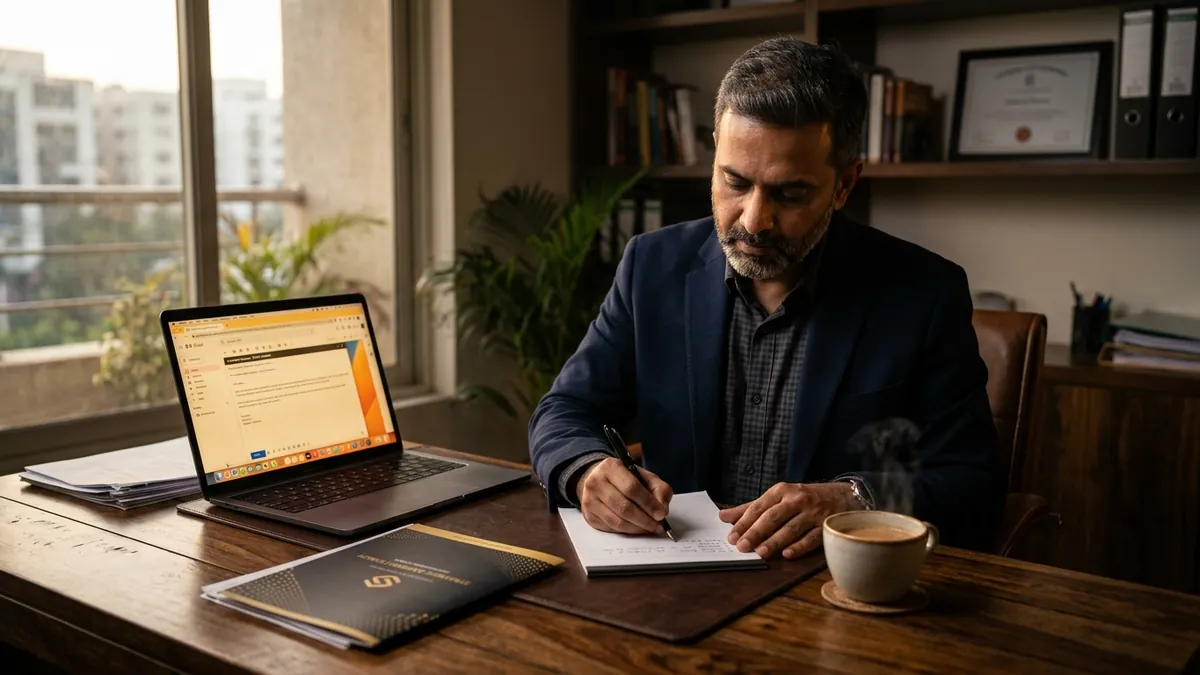
Here is what typically happens. A prospect sends a WhatsApp message or fills a contact form. You reply quickly, maybe even send a brochure or a price list. They say 'okay, let me check and get back.' You wait. Two days pass. You tell yourself they will come back if they are serious. They don't. You move on. That enquiry is dead — and in your head it becomes 'the market is slow' or 'people just want cheap.' But the truth is, you stopped the conversation too early and without any structure.
I have seen this with manufacturers, interior designers, training institutes, logistics companies, even premium product brands. The follow-up process — when it exists at all — is completely ad hoc. One team member follows up, another does not. Some leads get three calls in two days, others get ignored for a week. There is no script, no timeline, no clarity on who owns the lead and what the next step should be. The result is unpredictable revenue and a team that blames the market instead of the process.
The first thing I tell any founder is this: a follow-up is not a reminder, it is a conversation with a purpose. Every time you contact a prospect after the first enquiry, you should be moving them one step forward — not just checking if they 'had a chance to look at it.' That means your second message should answer a specific objection, share a relevant case study, offer to clarify something, or invite them to a short call with a clear agenda. Vague follow-ups get vague responses. Specific follow-ups get decisions.
Timing matters too. Most buying decisions in the MSME space — whether you are selling B2B services, machinery, packaging solutions or branded goods — happen within 48 to 72 hours of the initial enquiry. After that window, the prospect has either moved on mentally or started talking to someone else. If your first follow-up lands on day five because you were busy, you are not following up — you are sending a message into a closed deal. A basic rule I recommend: respond within the hour if possible, follow up again in 24 hours, and have a third touchpoint at 72 hours with something genuinely useful — not just 'just checking in.' If you want to audit where your enquiries are actually breaking down, a business growth diagnostic can show you exactly where the leak is.
Another pattern I see constantly is that the follow-up responsibility sits entirely with the founder. When the founder is in a meeting, travelling or simply overwhelmed, follow-ups stop. No one else on the team feels authorised or equipped to carry the conversation forward. This is not a people problem — it is a system problem. A simple CRM, even a well-maintained Google Sheet with lead status, last contact date, next action and owner name, can make a visible difference within two weeks. You do not need expensive software. You need accountability and a shared process that does not depend on one person's memory.
Here is something most founders do not realise: how you follow up also shapes how the prospect perceives your brand. A disorganised, inconsistent follow-up tells the prospect — without a single word — that your business probably operates the same way. Conversely, a structured, thoughtful follow-up process signals that you are a serious business that respects their time and takes commitments seriously. It builds trust before the contract is even signed. If you want to understand how your entire customer-facing journey looks from a prospect's point of view, consider booking a one-to-one consultation where we can map this out together.
The practical fix is not complicated but it does require discipline. Start by writing down your current follow-up steps — just what actually happens today, not what you intend. Most founders realise within five minutes that there is no real process, just hope. Then define three to five follow-up touchpoints with clear timing, medium (call, WhatsApp, email) and the specific purpose of each. Assign ownership. Build a simple tracker. Test it for 30 days. You will almost certainly see your conversion rate move — not because your product changed, but because you stopped leaving money at the door.
Growth does not always require more enquiries. Sometimes it just requires doing something deliberate with the ones you already have. If you are investing in marketing, advertising or referrals to bring leads in, the least expensive thing you can do to improve revenue is fix what happens after they arrive. That is where the real conversion work happens — not in the ad, not in the brochure, but in the follow-through. If you want to look at your full growth picture and not just this one piece, start with a brand analysis to see where your business stands today.
Want to understand where your business growth is stuck?
Book a Business Growth Diagnostic with Abhijit JK — an honest, focused 60-minute one-to-one session with Abhijit JK on your brand, website and growth.
Book a Business Growth Diagnostic